Source UFO LED High Bay Fixtures for Factories and Warehouses
Explore 30 UFO LED high bay fixture options tailored for industrial environments. Compare specifications such as IP66 ratings, 50,000-hour lifespans, and various wattages from 100W to 200W. Evaluate suppliers based on certifications like CE and RoHS to find the right lighting solution for your facility.
Key considerations
Products List




Comprehensive Sourcing Guide
UFO LED High Bay Fixture Sourcing Guide
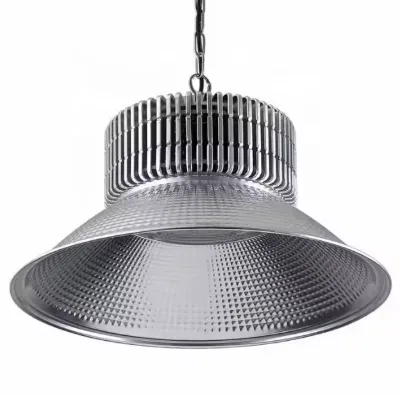
Buyers must first distinguish between square and circular UFO high bay designs, as the supplied data reveals distinct physical profiles ranging from 330mm to 380mm in width. The observed listings indicate a mix of die-casting aluminum and aluminum alloy bodies, which directly influences thermal management and structural durability for heavy industrial environments. Understanding these form factors is critical before evaluating internal components, as the housing geometry dictates the mounting hardware required for specific ceiling trusses or suspension wires.
Procurement teams should also note the significant variance in LED chip sourcing, with observations ranging from Bridgelux and CREE to Epistar 2835 configurations. This variation impacts the initial luminous efficacy and long-term color consistency, requiring buyers to specify the exact chip brand in their technical requirements. Since the observed power ratings span from 100W to 200W, selecting the correct wattage is essential to avoid over-lighting or under-lighting large spaces like warehouses and shipyards, ensuring the fixture matches the specific lumen output needs of the facility.
Product Scope and Observed Listing Signals
The observed product scope covers a wide array of industrial applications, including tunnels, factories, warehouses, mines, and shopping malls, reflecting the versatility of these high bay fixtures. Listings explicitly mention usage in food storage and exhibition spaces, suggesting that the IP66 waterproof rating and robust aluminum construction are suitable for environments with varying humidity and dust levels. Buyers should verify that the specific unit selected meets the environmental demands of their site, particularly regarding the working temperature range of -40°C to 50°C, which ensures reliable operation in extreme climates.
Commercial signals indicate a flexible customization landscape, with options for housing colors like yellow, white, grey, and black to match facility aesthetics or safety codes. The observed packaging standards, ranging from simple PE bags to complex carton systems with EPE foam, suggest that logistics handling varies by supplier and order volume. Procurement teams must clarify packing requirements early to prevent damage during transit, especially for large orders where the 37x37x51cm or 40x40x12cm carton dimensions will impact shipping costs and warehouse storage efficiency.
Technical Specifications to Verify
Technical verification must begin with the input voltage and frequency, as the observed data specifies 240V at 50-60Hz, which may not align with all regional power grids. Buyers should confirm that the driver is compatible with their local infrastructure to prevent immediate failure or the need for expensive step-down transformers. Additionally, the control mode is listed as switch control, meaning these units lack built-in dimming or smart connectivity unless explicitly customized, a limitation that must be addressed if the facility requires advanced lighting management systems.
Luminous performance and color quality are equally critical, with observed Color Rendering Index values ranging from Ra80 to 90% and color temperatures spanning 2700K to 6500K. The observed luminous flux efficiency of 100-110lm/W provides a baseline for energy calculations, but buyers must demand specific test reports for the exact model to confirm these figures. Furthermore, the beam angle of 120° is standard for general area lighting, yet specific high-bay applications might require narrower angles for focused task lighting, necessitating a careful review of the optical design before finalizing the purchase.
Compliance and Safety Documentation
Safety compliance is non-negotiable, with observed certifications including CCC, CE, EMC, FCC, RoHS, SAA, and SASO, indicating a broad market readiness for various international standards. Buyers must request valid, up-to-date certificates for the specific batch being purchased, as these documents verify that the electrical components and materials meet rigorous safety and environmental regulations. The presence of TUV and ETL certificates in some listings further suggests that certain models may be suitable for North American markets, but verification of the specific test reports is required to ensure legal compliance in the destination country.
Documentation should also cover the warranty terms, which are observed to be five years, a strong indicator of manufacturer confidence in product longevity. However, the warranty coverage details, such as whether it includes labor costs or only replacement parts, must be explicitly defined in the contract. Buyers should also verify the IP66 waterproof rating through independent test data, ensuring that the die-casting aluminum and PC cover construction truly prevents water ingress in wet or dusty industrial environments like shipyards and mines.
Cost Drivers and Commercial Terms
Cost drivers in this category are heavily influenced by the LED chip brand and the complexity of the driver circuitry, with premium chips like CREE commanding higher prices than Epistar alternatives. The observed price range of $11.13 to $120 USD reflects significant differences in power output, build quality, and certification levels, requiring buyers to balance budget constraints with performance requirements. Understanding that the Minimum Order Quantity (MOQ) ranges from 1 to 1000 units allows for flexibility, but larger orders often unlock better pricing tiers and more favorable shipping terms.
Commercial terms must clearly address lead times and payment structures, as these are not explicitly detailed in the product listings but are critical for supply chain planning. Buyers should negotiate payment milestones that align with production stages to mitigate financial risk, especially for customized orders involving specific housing colors or circuitry designs. Additionally, the inclusion of lighting solutions services like Dialux Evo layout design can add value, potentially reducing installation costs by ensuring optimal fixture placement and reducing the total number of units required for adequate illumination.
Supplier Qualification and Quality Control
Supplier qualification should focus on the manufacturing location, with all observed products originating from Guangdong, China, a hub known for LED production but requiring strict oversight. Buyers must verify the supplier's production capacity and quality control processes, specifically their ability to maintain consistent binning for LED chips to ensure uniform color temperature across large installations. The availability of customization services suggests that the supplier has flexible production lines, but this flexibility must not compromise the consistency of the die-casting aluminum housing or the integrity of the IP66 sealing.
Quality control protocols must include pre-shipment inspections that verify the physical dimensions, such as the 330mm or 285mm diameters, and the structural integrity of the lamp body. Buyers should request sample units for independent testing to confirm the claimed lifespan of 50,000 hours and the actual luminous flux output before committing to large orders. Establishing a clear communication channel for defect reporting and returns is essential, ensuring that any non-conforming products are identified and resolved quickly to prevent project delays.
Long-Term Procurement Checks
Long-term procurement success depends on verifying the actual lifespan claims, as the observed 50,000-hour rating is a theoretical maximum that depends heavily on operating conditions and thermal management. Buyers should monitor the thermal performance of the aluminum alloy housing in real-world conditions to ensure that the junction temperature remains within safe limits, preventing premature lumen depreciation. Regular audits of the supplier's quality records and warranty claim history can provide insights into the long-term reliability of the fixtures in the field.
Sustainability and end-of-life considerations are also vital, given the RoHS compliance observed in the listings, which restricts hazardous substances. Buyers should plan for the eventual disposal or recycling of the fixtures, ensuring that the supplier provides guidance on handling the electronic components and aluminum materials responsibly. Maintaining a relationship with the supplier for future spare parts and potential upgrades ensures that the lighting infrastructure remains operational and efficient throughout its intended service life, protecting the initial investment.
FAQs
What certifications do ufo led high bay fixtures typically have?
These fixtures commonly hold CCC, CE, EMC, FCC, RoHS, SAA, and SASO certifications. Some models also feature TUV and ETL marks. These credentials ensure compliance with international safety and electromagnetic standards, allowing safe installation in diverse global markets and industrial environments without regulatory hurdles.
How long is the lifespan of a ufo led high bay light?
The lifespan is typically 50,000 hours or more. This extended durability reduces maintenance frequency and replacement costs in high-ceiling areas. The long operational life ensures consistent illumination for factories, warehouses, and gynasium spaces, providing reliable performance over many years of continuous daily use.
Can ufo led high bay fixtures be customized for specific projects?
Yes, customization is available for many models. Buyers can often select specific LED chips like Bridgelux, CREE, or Epistar. Additionally, housing colors such as yellow, white, grey, or black can be chosen. This flexibility allows precise matching to aesthetic and technical requirements for unique industrial applications.
What is the IP rating for waterproof ufo led high bay lights?
Many units feature an IP66 waterproof rating. This ensures protection against powerful water jets and dust ingress, making them suitable for harsh environments. The die-casting aluminum body and PC cover provide robust sealing, ensuring reliable operation in shipyards, mines, and other wet or dusty industrial settings.
Which LED chips are used in these high bay fixtures?
Common LED chips include Bridgelux, CREE, and Epistar. Epistar 2835 chips are often used in configurations like 1W*120PCS or 180PCS. These high-efficiency chips deliver luminous flux of 100-110lm/W, ensuring bright, energy-efficient illumination for large spaces like food storage facilities, exhibition halls, and shopping malls.
What is the input voltage range for these fixtures?
The standard input voltage is 240V at 50-60Hz. This range supports compatibility with most global electrical grids. The fixtures are designed to operate reliably within this voltage specification, ensuring stable performance in various commercial and industrial settings without requiring additional voltage conversion equipment for standard installations.